

Trade Tests Explained: What Happens When You Visit Our Manila or Johannesburg Centre
If you have applied for a Sama Talent role in Ireland, the UK, or the United States, somewhere in your application process the words “trade test” will appear. For most candidates, that phrase is the most stressful part of the journey. It does not need to be.
This article explains exactly what trade testing means at Sama Talent, what happens at our Manila and Johannesburg test centres, what we are actually assessing, and how the tests are designed to be a fair representation of work you have already done in your career. It also explains how we tailor tests to the specific needs of each client, why we run driving tests on the exact same trucks you drive at home, and what employers see at the end of the process.
This is not a guide to passing a test you have not earned. It is a guide to walking in confident, knowing what to expect, and giving a real picture of your real skills.
Why trade testing exists at all
Most international recruitment agencies do not trade test their candidates. They send CVs. The CV says the candidate has ten years of experience as a panel beater, and an employer 8,000 kilometres away is supposed to take that on faith.
That model fails for both sides. Employers receive candidates who cannot do the job they were hired for. Candidates arrive in a new country, fail probation, and find themselves with cancelled visas and unpaid debt. Everyone loses except the agency, which has already taken its fee.
Trade testing solves this by verifying skills before any commitment is made. A welder who passes a coded weld test at our Johannesburg centre is genuinely a coded welder. A driver who passes a full Class 1 assessment on a Scania R450 in Johannesburg is genuinely competent on European-spec artics. The CV is corroborated by physical evidence, witnessed by qualified inspectors, before the employer is asked to make any decision.
There is also a broader industry context. Welder certification, in particular, is a regulated process internationally. TWI Certification Ltd, through its CSWIP certification schemes, offers welder certification based on qualification testing in accordance with a wide variety of UK, US, European and International Standards. Welder qualification tests can be carried out in accordance with standards including BS EN ISO 15614-1, BS EN ISO 15613, BS EN ISO 15614-7 or 8, BS EN ISO 9606 or ASME IX. Where employers require coded welders, we test against the specific code the employer needs, not a generic “welding test.” Seasonal Work VisaUK Visa Jobs
Our two test centres
Sama Talent operates trade testing facilities in two locations.
Manila, Philippines. Our Manila operations centre handles trade testing for Filipino candidates across mechanical, light vehicle, and certain trades roles, alongside skills assessment, English testing, and video interviews for office-based and remote roles. Manila is led by Wilsie Joy Norona (Business Director) and Christ Elija Ventura (Recruitment Director), with 30 recruiters across Luzon, Visayas, and Mindanao.
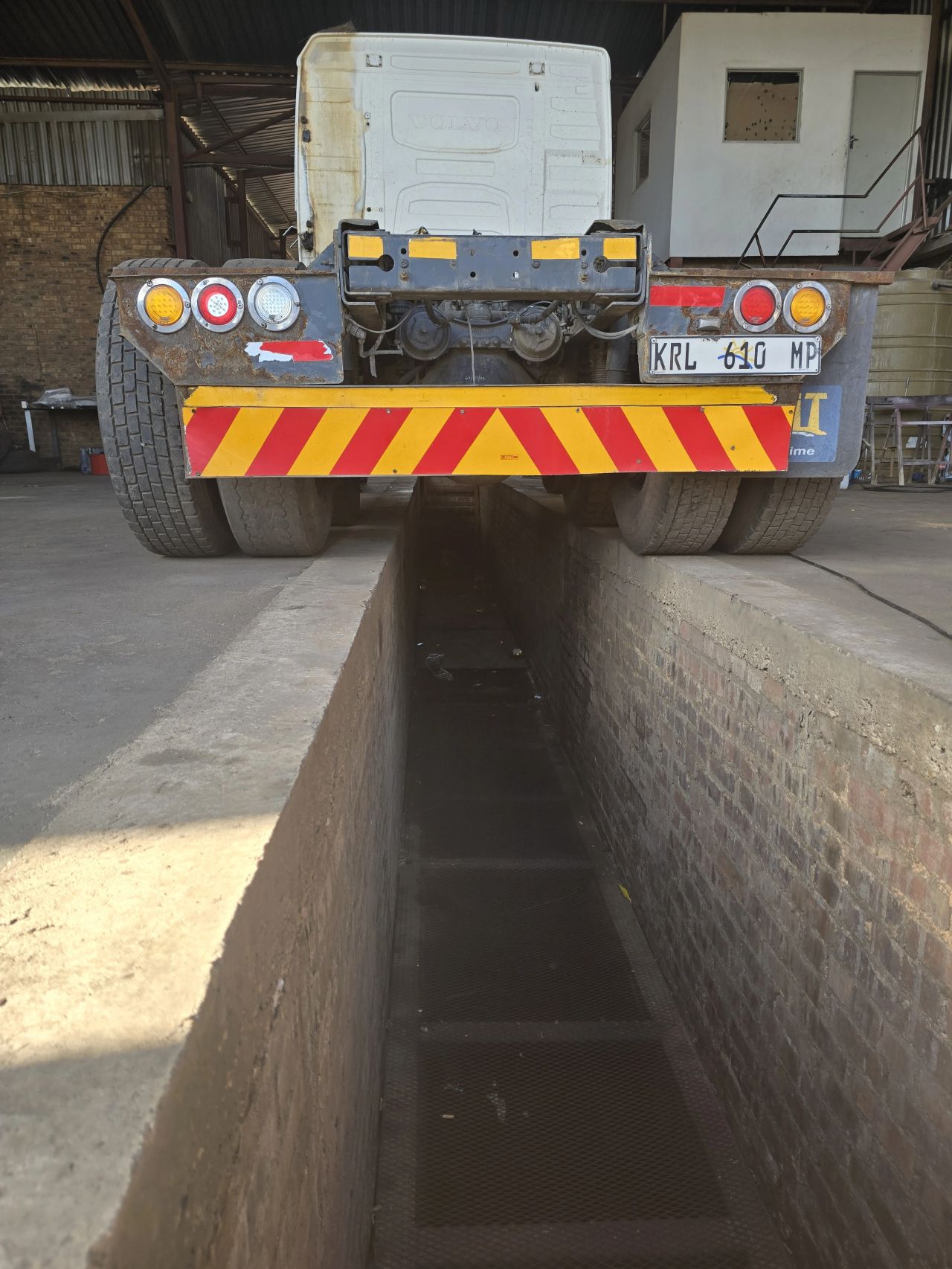
Johannesburg, South Africa. Our Johannesburg test centre is where the heavy vehicle, heavy welding, and structural trades testing happens. The centre is led by James Patrick alongside a six-strong trades team. The Johannesburg facility has working workshop bays, welding booths, an inspection pit, paint and prep bays, and a full driving assessment yard with European-spec artic trucks and rigid HGVs.
Both centres operate continuously, with assessments scheduled around candidate availability and employer hiring needs. Most candidates attend their assessment within one to two weeks of completing their initial skills screening.
Driving tests: same trucks, same routes, same way of working
This section is the most important part of this article for any HGV or LGV driver considering applying.
Here is the underlying fact that makes our South African driving testing genuinely meaningful: the trucks driven on South African roads are the same trucks driven on Irish and UK roads.
The South African heavy commercial vehicle market is dominated by the same European brands that dominate the Irish and UK markets. The leading European truck brands in South Africa include MAN, Mercedes-Benz, Volvo, Scania, Iveco, Renault Trucks, and DAF. Scania has a major presence in South Africa with their own dealer network. Volvo, Mercedes-Benz, MAN, and DAF all have significant fleet presence across South African haulage operations. Department of Enterprise, Trade and Employment
What this means in practice for a South African driver applying for an Irish or UK role: you have been driving the same vehicle, with the same gearbox configurations, the same braking systems, the same digital tachograph requirements, and broadly the same cab layout that you will encounter on day one in your new job. A Scania R450 in Cape Town drives the same way as a Scania R450 in Cork. The instrument cluster, the gearbox selection, the retarder, the cruise control, the lane departure systems, the air braking systems are all identical.
This is genuinely a major advantage for South African drivers placed into Irish and UK roles. You are not retraining on a new vehicle class; you are applying existing skills to a new road network.
The driving test at our Johannesburg centre is designed to verify those existing skills properly. A typical full driving assessment covers:
Pre-trip inspection. Walk-around vehicle check covering tyres, lights, mirrors, fluid levels, kingpin and fifth wheel coupling (for artic units), brake lines, ABS systems, load security checks for trailer-mounted candidates. We watch how methodically you do this. Drivers who skip steps in the yard skip them on the road too.
Tachograph compliance. Inserting and operating the digital tachograph correctly. Mode selection, manual entries, break/rest period understanding. This is identical regulation in South Africa and the EU, so the candidate either knows it or does not.
Yard manoeuvres. Reverse parking into a bay, hitching and unhitching trailers, navigating tight spaces. Done in the same way as the practical components of the UK Driver CPC initial test or the Irish equivalent.
Open road driving. Drive cycle on real roads outside the test centre. We assess gear selection, anticipation, lane discipline, speed management, mirror use, and decision-making in real traffic. The route includes urban driving, dual carriageway, and motorway sections.
Loaded handling (where relevant). For drivers being assessed for specific operations (artic, fridge, tipper, skip, RoRo, multidrop), we run loaded handling tests appropriate to the role. A driver applying for a refrigerated transport role is tested on a loaded fridge unit. A driver applying for a skip role is tested on skip operations.
CPC-relevant knowledge check. Verbal assessment covering hours of service, weight limits, securing loads, hazard awareness, and incident response. This is preparation for the Driver CPC requirements you will encounter in your destination country, and it identifies any gaps before you arrive.
The driving test is delivered by an assessor with commercial driving qualifications and recent UK or Irish operating experience. Reports go directly to the employer with timed sections, clean error logs, and a competence rating against the specific role being filled.
Mechanical and HGV mechanic tests
Mechanical testing at our Johannesburg and Manila workshops is designed around the actual work the candidate will do. We do not run textbook tests on dismantled components in a classroom. We run real diagnostic and repair work on real vehicles.
A typical HGV mechanic test covers:
Diagnostic walkthrough. Presented with an actual fault on an actual HGV (engine, transmission, electrical, hydraulic, or air system), the candidate is asked to talk through their diagnostic process. We watch how they reason, what they check first, what tools they use, and whether they jump to conclusions.
Practical repair task. A defined repair or service procedure, typically taking 60 to 120 minutes. This could be a brake overhaul, a clutch slave cylinder replacement, an air system diagnostic, an ECU fault read and clear, or a similar task. We watch how methodically the work is done, how tools are handled, how safety precautions are observed, and how cleanup is managed.
Tool competence. Demonstrating use of OEM diagnostic tools (Cummins Insite, Volvo Tech Tool, Scania SDP3, Mercedes Xentry, DAF Davie, etc., as available at the centre). The same OEM tools used in South African workshops are used in Irish and UK workshops.
Knowledge check. Verbal assessment covering hours of service for inspections, DVSA or RSA roadworthiness requirements equivalent to candidate’s existing market, common fault patterns on specific vehicle types, and electrical/hydraulic schematic reading.
For light vehicle mechanics applying for Irish bodyshop or garage roles, the test runs on cars and light commercial vehicles rather than HGVs, but the same principles apply: real fault, real diagnostic, real repair, real assessment.
Welding and fabrication tests
Welding tests are the most formalised part of our trade testing because the international standards are well-defined.
For candidates applying for general fabrication, structural, or production welding roles, we test against the standard the employer requires. Most commonly this is BS EN ISO 9606, ASME IX, or BS 4872 (a UK welding standard used to certify all welding positions on sheet, plate and pipe for mild steel and aluminium across MIG, MAG, TIG, and Flux cored welding processes). HGV Ireland
A typical welder test runs as follows:
Process and material specification. Candidate is given the welding procedure specification (WPS) appropriate to the test. This sets out the process (MIG, TIG, MMA, FCAW), the material grade, the joint type, the position, and the consumable.
Sample preparation. Candidate prepares the test piece — usually a butt weld in plate or pipe at a specified position (1G, 2G, 3G, 4G, or all-positional for pipe codes).
Live welding. Candidate produces the weld. We observe technique, parameter selection, arc handling, fume management, and PPE compliance. For BS 4872 testing, candidates are given no more than 120 minutes to complete the test. Institute of The Motor Industry
Non-destructive testing. The completed weld is subject to visual inspection by a CSWIP-qualified inspector. For higher-grade tests, this is followed by macro etching, bend tests, or radiography depending on the standard.
Destructive testing where required. For BS 4872 testing, the welded joint is subject to visual or surface inspection, as well as a destructive bend test, nick break fracture test and macro etch. Institute of The Motor Industry
Certification. If the weld passes, the candidate receives a formal welder coding certificate to the specific standard tested. Welder coding certificates must be signed every six months by a suitably qualified person to confirm the welder is still producing welds of the required standard. Formal re-testing is required at least every two years. Institute of The Motor Industry
Coded welder certification has real value beyond just the Sama Talent placement: it is an internationally recognised qualification you carry with you for your career.
For pipe welders, structural welders, and pressure vessel welders, we run more advanced tests under the appropriate ISO 15614 or ASME IX codes. For sprayers and finishers, the test runs in our paint and prep bay with sample panels, finish quality assessment, and colour match work.
Bespoke client tests
The standard tests above cover the core trades. But many of our employer clients have specific operational requirements that go beyond generic trade testing. For those clients, we design bespoke assessments tailored to the specific role.
Examples of bespoke client testing we have run:
Skip lorry operations. For Irish and UK skip hire clients, we run a bespoke assessment covering hydraulic lift operation, skip exchange procedure on simulated drop sites, customer interaction protocols, and route planning on tablet-based systems used by the specific client.
Refrigerated transport. For refrigerated haulage clients, we test temperature management on fridge units, multi-temperature trailer operation, customs documentation handling for ferry routes, and load securing for chilled and frozen freight.
Plant transport. For plant hire clients moving excavators, dumpers, and rollers, we test loading procedures, securing protocols, route planning around restricted bridges and weight limits, and the documentation requirements for abnormal loads.
Specialist bodyshop work. For high-end automotive bodyshop clients, we test colour-match accuracy across modern water-based paint systems, panel forming on aluminium and high-strength steel, and finishing standards aligned to specific manufacturer warranty requirements.
Workshop joinery. For specialist joinery clients, we test CNC operation on the specific machinery the client uses, accuracy on bespoke cabinetry and fittings, and reading of joinery drawings to the specific standards of the workshop.
Data centre electrical work. For data centre construction clients, we test on the specific electrical systems used in mission-critical environments, including UPS configurations, containment systems, and the documentation discipline expected on data centre sites.
Bespoke tests are built in consultation with the client. The employer tells us exactly what their workshop or yard requires, we build the test, and we run it on candidates being shortlisted for that specific role. This means a candidate arriving in Ireland or the UK has already been assessed against the actual operational requirements of the specific employer, not a generic version of the trade.
What to bring, what to wear, what to expect on the day
If you are scheduled for a trade test at our Manila or Johannesburg centre, here is what to expect.
Bring. Your passport (for identification), any existing trade certifications or licences you hold (originals, with copies), and your own work gear if you have it. Safety boots, gloves, and any PPE specific to your trade. We have spares available if you do not own your own, but candidates who bring their own gear show preparation, and we note it.
Wear. Practical work clothes you can actually work in. If you would not turn up to work dressed in it, do not turn up to the test dressed in it.
Time. Most full trade tests run between two and six hours depending on the trade. Welder tests on a single position run 90 to 120 minutes; full driving assessments run 3 to 4 hours; HGV mechanic tests run 2 to 3 hours. Plan your day around the assessment, not the other way around.
Mindset. Treat the test like the work it represents. Be methodical. Be safety-conscious. Ask clarifying questions if you need to (asking for clarification is professional, not weakness). If you have not done a specific task recently, say so before the test begins. Assessors are not trying to trip you up; they are trying to assess what you can actually do.
What we are looking for beyond technical skill. Punctuality. Professionalism in the way you interact with the assessor and centre staff. Honesty about your experience. Methodical, safe work practices. The willingness to ask questions or admit gaps. Candidates who try to bluff their way through a task they do not understand fail the test. Candidates who say “I have not done this specific operation but here is how I would approach it” often pass with strong feedback.
What happens after the test
Within two to five working days of your test, we prepare a complete assessment report covering:
- Practical competence ratings against the role-specific requirements
- Technical knowledge gaps and strengths
- Safety and methodology observations
- Recommended role suitability and any specific employer matches
- Any coded welder certifications earned and the codes covered
- Driving licence verification status and CPC equivalence assessment
This report goes to you, so you know exactly where you stand and what feedback the assessors recorded. It also goes to the employers you are being shortlisted to, so they see the same evidence you do.
If you have passed strongly, we move you directly into employer interviews. If you have passed with reservations on specific tasks, we discuss whether further development is needed or whether the role match needs to be adjusted. If you have not passed, we tell you honestly what the gap was and what you can do about it.
Failed tests are not the end. Some candidates re-test after gaining further experience. Some candidates are matched to different roles than the one originally targeted, based on what the test actually showed about their strengths. Either way, the test gives you a clear, evidenced picture of where you stand.
One more thing about driving tests in particular
Coming back to the point we started with, because it bears repeating for South African and Filipino driver candidates considering UK or Irish roles.
The trucks you drive in South Africa are, in operational terms, the same trucks you will drive in Ireland or the UK. The Scania, Volvo, MAN, Mercedes-Benz, DAF, Renault, and Iveco fleet that dominates South African haulage is the same fleet that dominates European haulage. The cab layout, the gearbox configuration, the air braking systems, the digital tachograph requirements, the lane departure and emergency braking assist systems, the cruise control logic, the retarder operation — all identical.
Drivers from the Philippines have a slightly different transition, because Filipino driving experience varies more by employer (some Filipino hauliers run European fleets, some run Japanese fleets like Isuzu, Hino, and Fuso). For Filipino candidates, we assess the specific vehicles you have driven and match you to UK or Irish employers whose fleet is closest to your existing experience.
The trade test at Johannesburg or Manila is not a test of whether you can learn a new vehicle. It is a test of whether you can already do the job. For the vast majority of South African drivers, you can. The test is the evidence.
Ready to be tested?
If you are a skilled driver, mechanic, welder, panel beater, scaffolder, electrician, or other tradesperson considering a role in Ireland, the UK, or the United States, the trade test is the bridge between your CV and your new career. We make it fair, evidence-based, and a real reflection of the work you have already done.
Visit samatalent.com/jobs to see open roles. Email jobs@samatalent.com to register your interest. We will tell you straight whether trade testing makes sense for your specific situation and what to expect when you arrive at our Manila or Johannesburg centre.
No fees, no obligation, and a genuine assessment of your real skills.
About this article: Citations are drawn from TWI Certification (the welding standards body operating CSWIP schemes), BS EN ISO welding qualification standards, BS 4872, and South African commercial vehicle market data. Sama Talent operates trade testing centres in Manila, Philippines and Johannesburg, South Africa, with assessments delivered by qualified CSWIP welding inspectors, commercial driving assessors, and trade-qualified mechanics. Sama Talent is a regulated Irish employment agency, EA 5649.